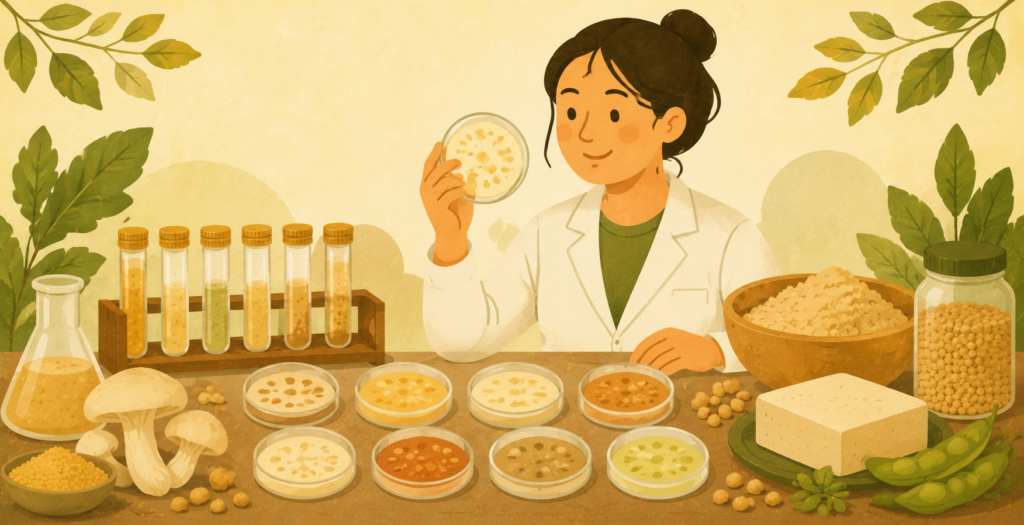
Researchers from the University of Castilla-La Mancha examined 27 yeast strains and identified ten as suitable for use in alternative protein products. Among other factors, the study, published in the journal Food Bioscience, assessed protein content and the biomass's capacity to retain water and bind oil. The selected strains contained approximately 69% protein by dry matter, compared with the 45% to 56% commonly reported for yeast. In properties important for texture, juiciness and mouthfeel, the yeast biomass performed as well as, or better than, conventional plant proteins.
Most strains demonstrated an ability to reduce cholesterol during testing, and some produced an enzyme that helps break down lactose. However, the high temperatures used in food production destroy living cells and eliminate some of these functions. According to the researchers, even inactivated yeast may provide certain effects through cell walls and released compounds that survive cooking. The team now wants to establish whether the selected strains can be grown on food-industry by-products, including melon waste.